Every rooftop's website, checked daily by someone who doesn't work for your vendor.
DealerSentinel reads each store's website the way a shopper does, every day, and tells the group what is wrong, where, and how to fix it. Inventory, pages, security, search. Plain English, with proof.


The problem, in one paragraph
Your vendor grades its own work. Your team sees the site the day it launches and the day something breaks loudly. In between, vehicles sit without photos, prices go missing, links die on vehicle pages, a description says black on a gray car, and anyone can send email that looks like it came from your store. Nobody at the group is checking, and the vendor won't tell you.
What it finds
Four modules, one screen each, on every rooftop.
Inventory that matches the lot
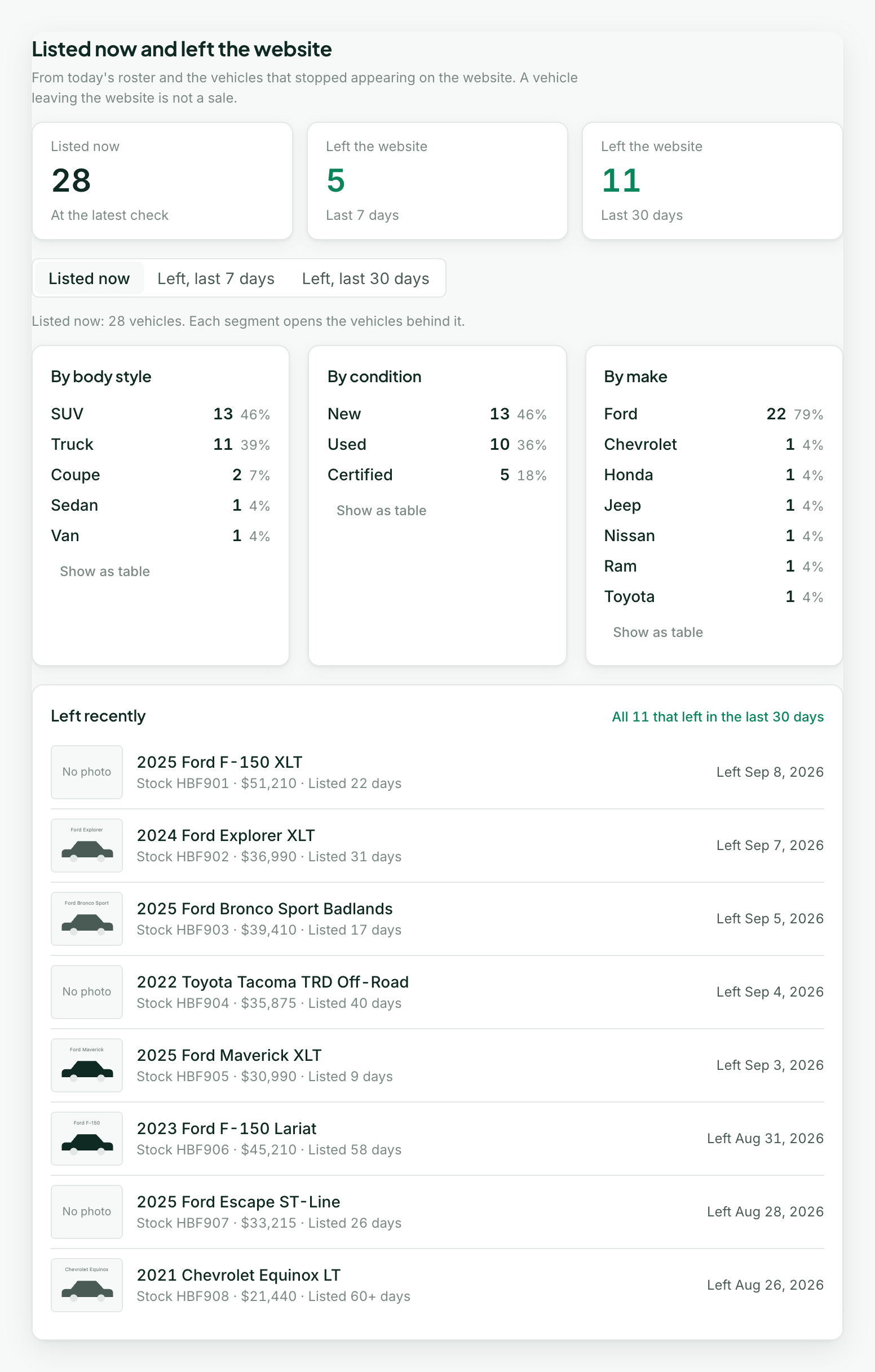
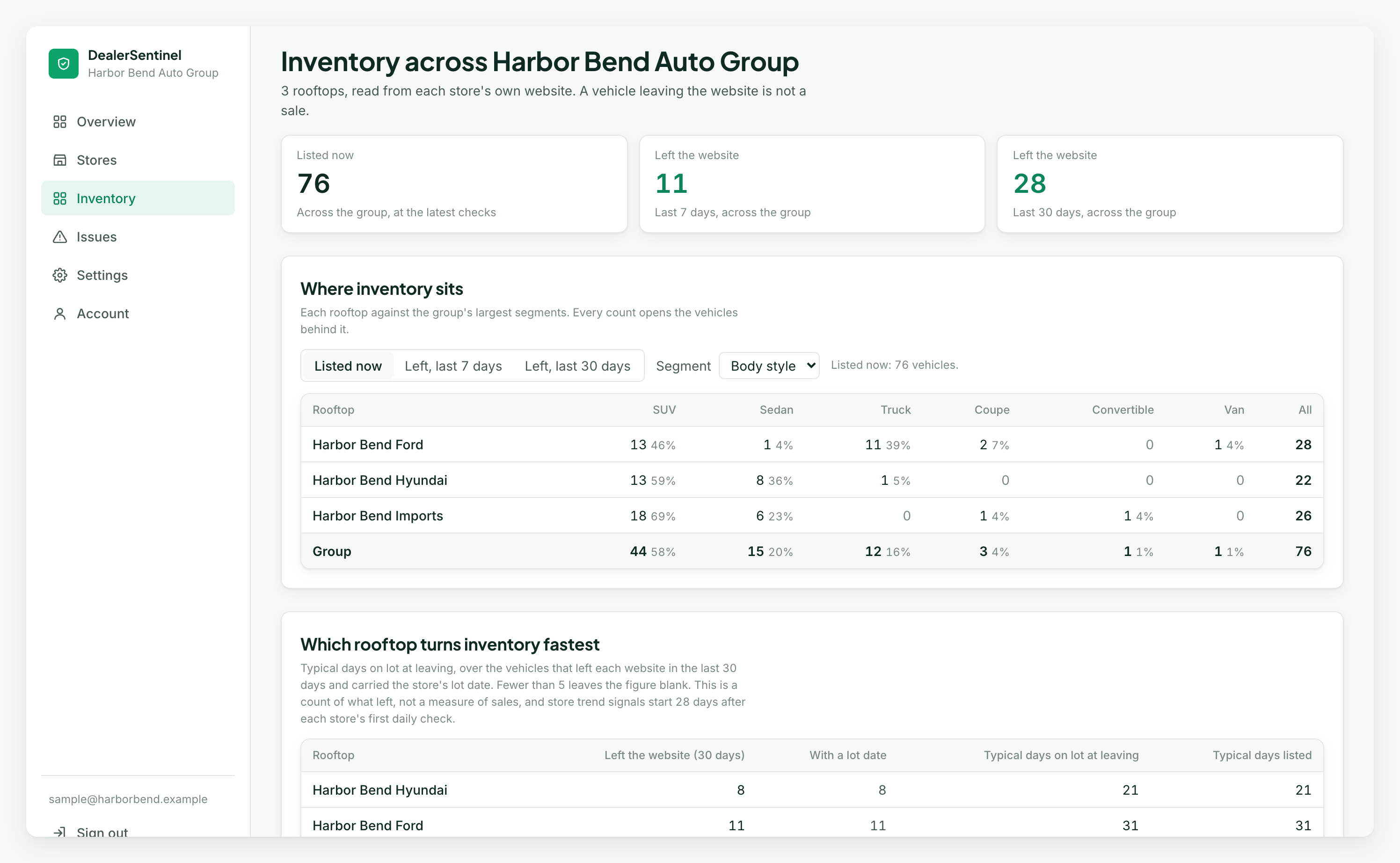
Every vehicle from the day it appears on the website to the day it leaves. What is listed now by body style, condition, and make. What left in the last 7 and 30 days. Days on lot from your own lot date. Descriptions that disagree with the listing on color, mileage, drivetrain, or transmission. Click any number and see the vehicles behind it.
Pages that work
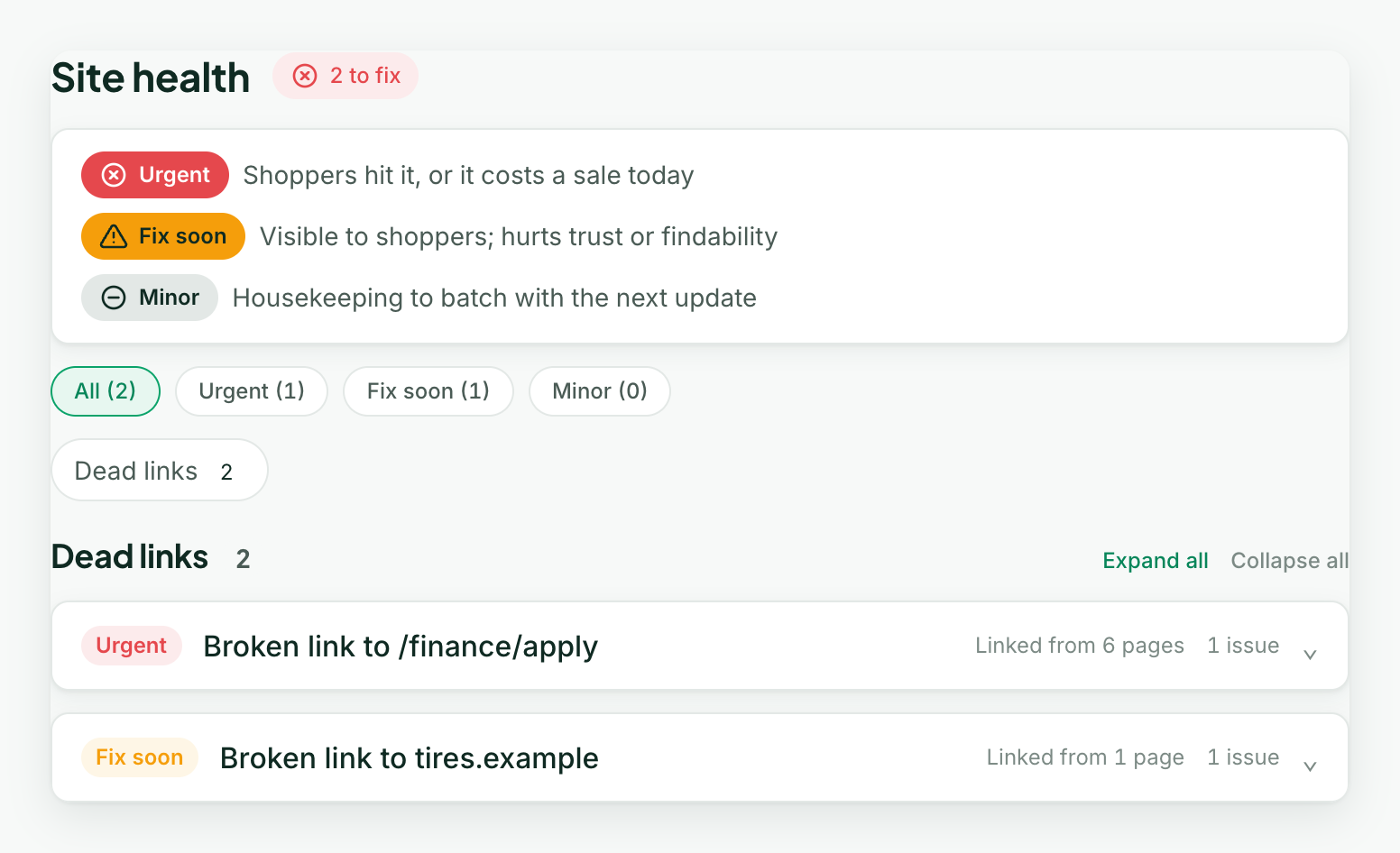
Broken links with the page each one lives on, dead pages, missing photos, missing prices, pages that return errors. "Show me on the page" opens the live page scrolled to the sentence.
Security from the outside
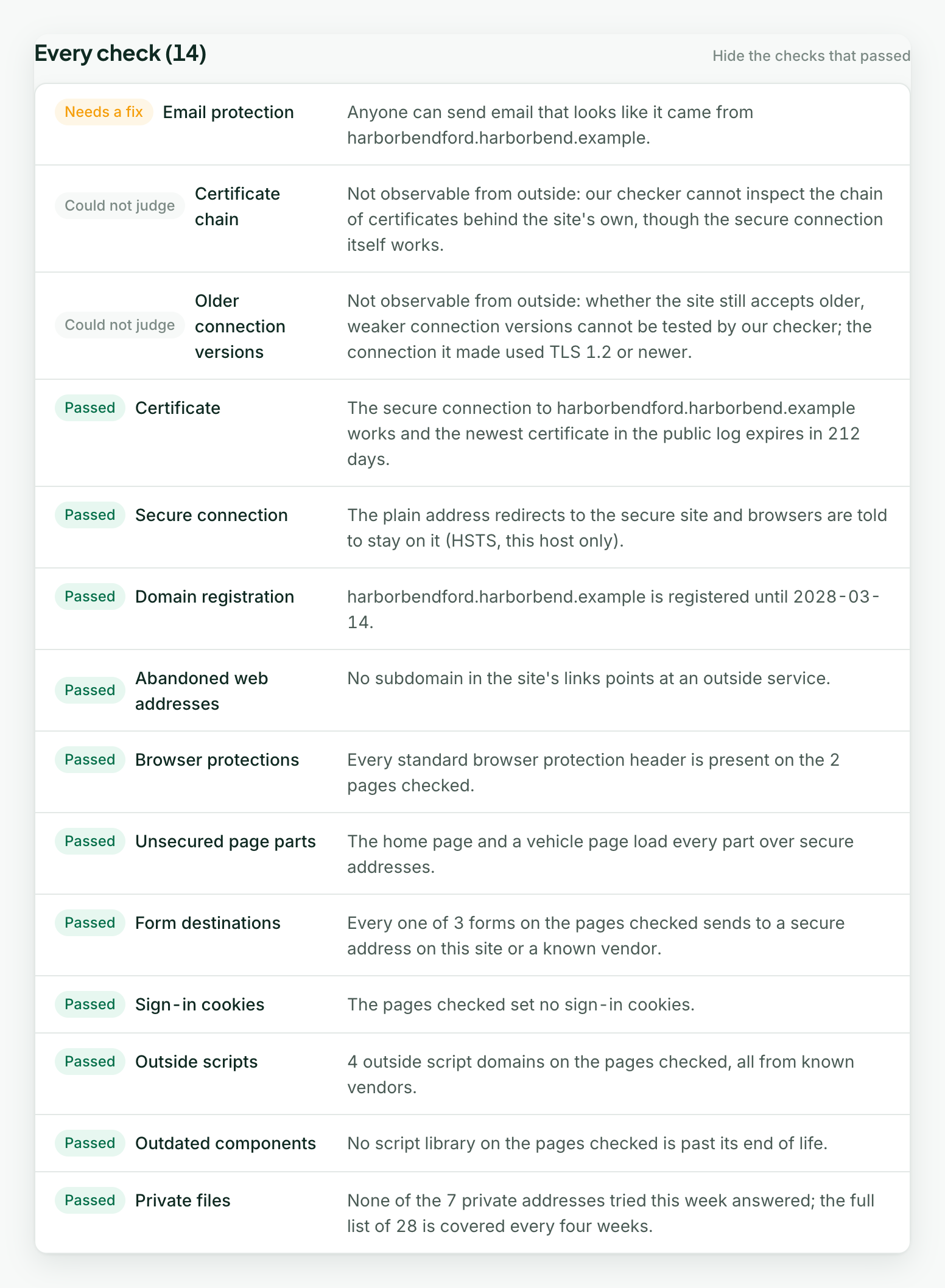
Fourteen checks a browser, a mail server, or a DNS resolver can make without signing in: certificate, HTTPS, email spoofing protection, browser protections, domain expiry, outside scripts. No scans. Nothing here ever says a site is secure; it says what is open.
Search, from our own crawl
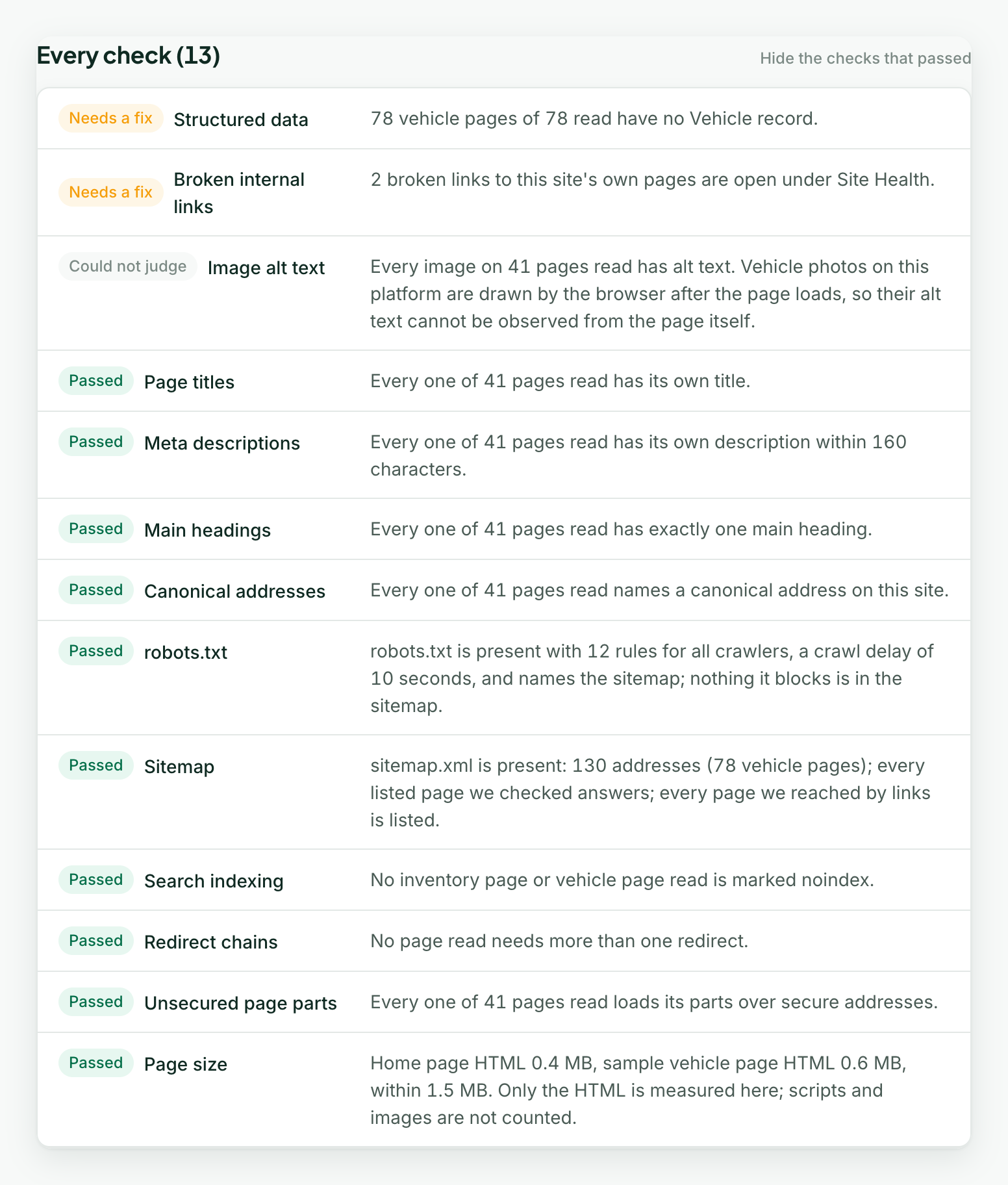
Thirteen checks on the pages we already read: titles, descriptions, headings, canonical tags, structured data, robots and sitemap, redirects, page size. No outside data. If Google can't tell your cars are cars, this is where it shows.
Plus trends
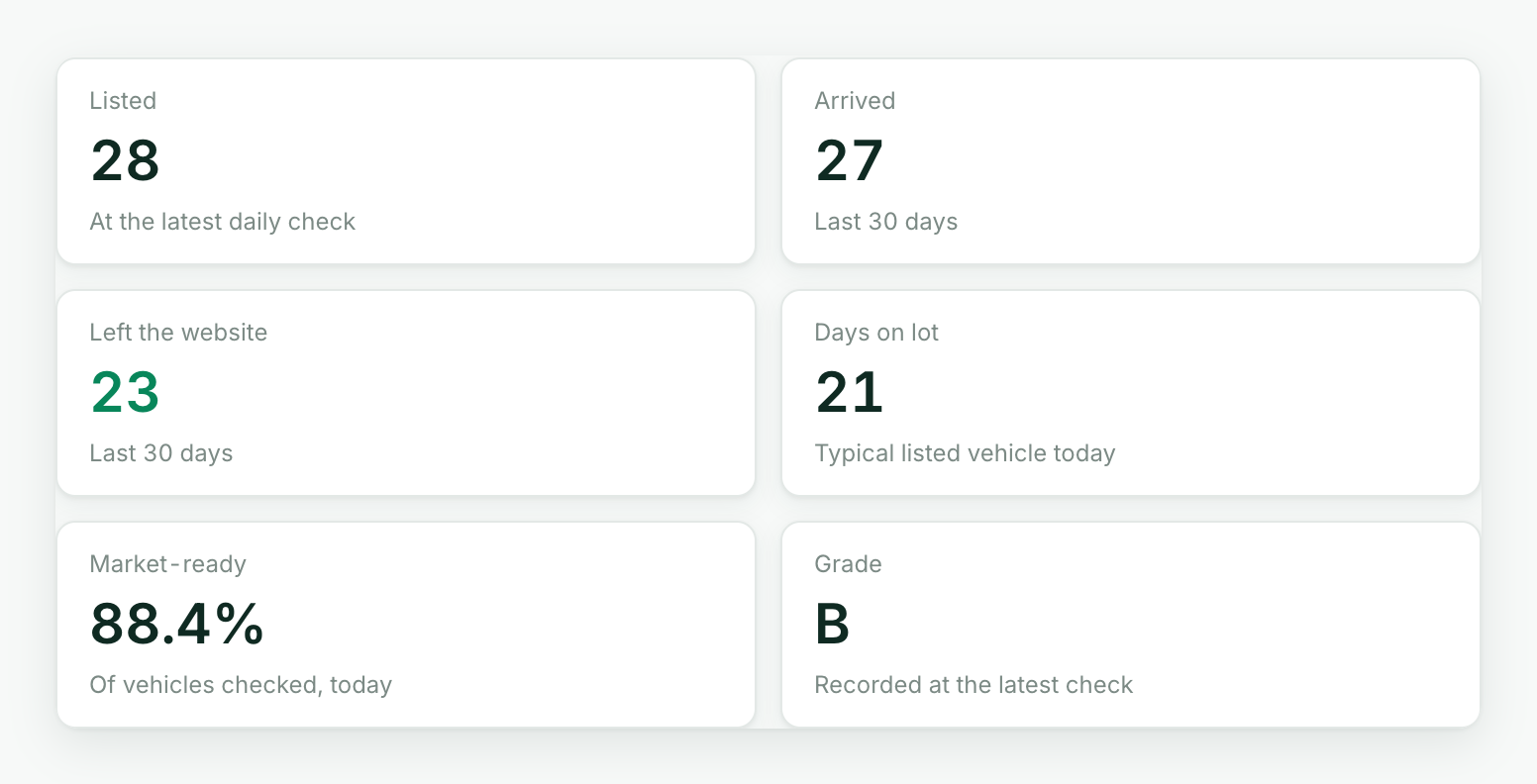
Arrivals against departures, mix over time, days on lot, a market-ready score and letter grade per rooftop, and a short plain-English read of the numbers on request.
What the group sees
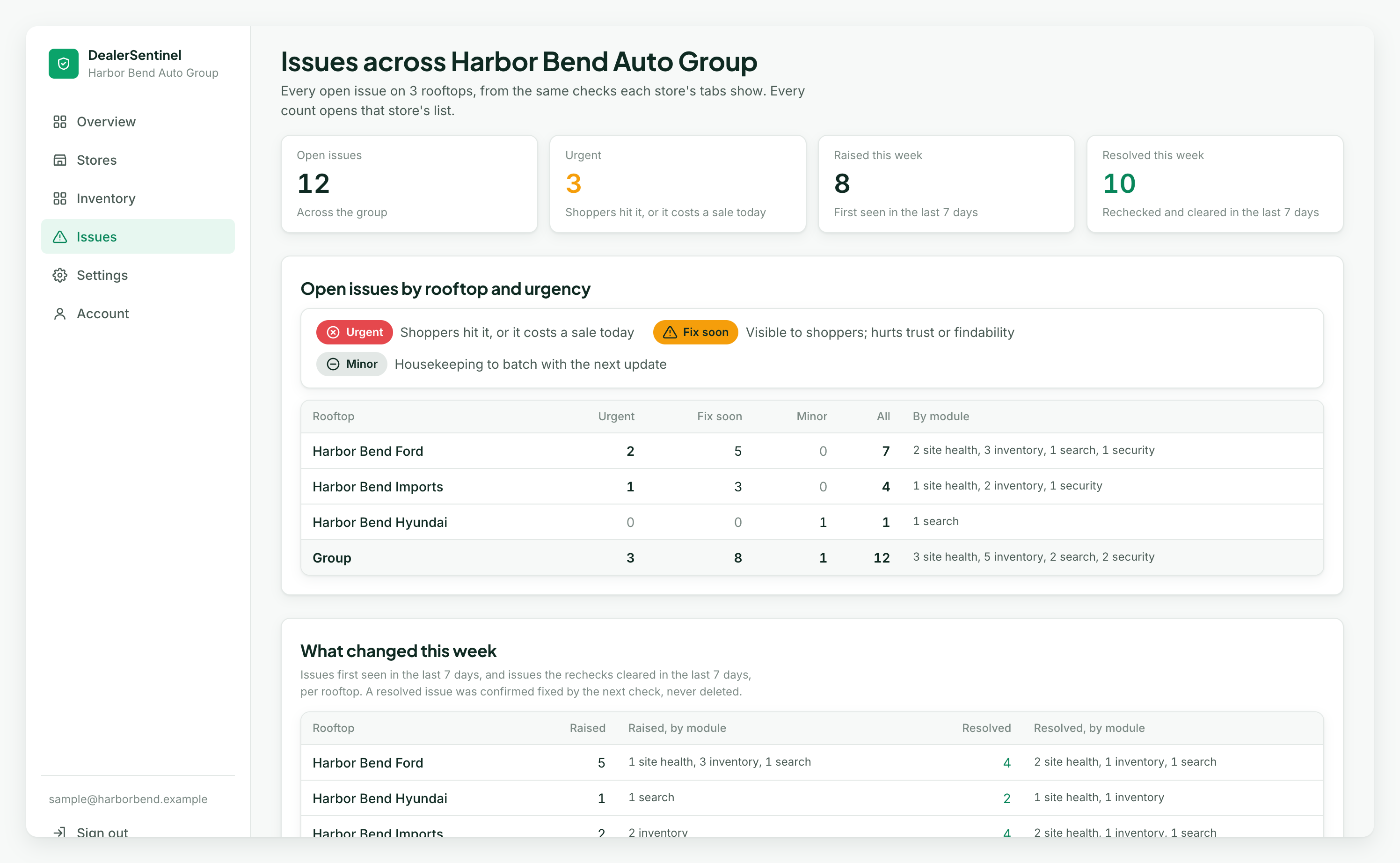
Group administrators get the cross-rooftop views: where inventory sits, rooftop by segment; which rooftop turns inventory fastest; every open issue by rooftop and urgency; what was raised and resolved this week. One weekly summary email carries all of it, per store.
What it could be costing you
A used vehicle listed without real photos is 40% less likely to draw a lead than one with them, and a new vehicle 30% less likely1. Nine in ten shoppers call photos extremely important when they evaluate a vehicle online2. Shoppers spend close to 15 hours online across four or five websites before they buy3, and a vehicle with no price, no photos, or a dead link is the one they skip.
Ten vehicles sitting a week without photos. A price missing on the newest arrivals. A vehicle page that returns an error from the ad you paid for. Each one is a lead you bought and did not get. Across a rooftop, across a month, that is thousands of dollars in leads and gross that never reach the desk, and it is invisible until someone looks every day.
DealerSentinel looks every day.
A plain-English fix on every issue
Every issue says three things: what a shopper sees, why it matters, and what to do about it. No status codes, no jargon, no report to decode. Your marketing manager can act on it; your vendor can fix it from the sentence.


What DealerSentinel never does
- It never calls a departure a sale. A vehicle leaving the website is not a sale, and every surface says so.
- It never holds customer data. Not one name, phone, or email. Public inventory and public pages only.
- It never reads a competitor's site. Your rooftops, with your written authorization, nothing else.
- It never changes your website. Every finding is a proposal a person acts on.
- It never says a site is secure. It says what is open, from outside.
Independent of your vendor
DealerSentinel is not a website vendor, a CRM, or a listing site, and takes no money from any of them. It reads what your vendor built and reports to you.
Built for groups, priced per rooftop
One sign-in for the group, one page per store, one weekly email per rooftop. Every engagement is quoted per rooftop, for the rooftops and modules you bring. Request a quote and we answer within three business days.